
When choosing a hat for cooler weather, warmth seems like the obvious priority. The thicker the material, the more coverage it provides, and the more protection it offers from cold air, the better the hat must be.
But fall weather does not work that way.
A typical autumn day can begin with a chilly morning, become surprisingly mild around midday, and finish with a cold evening. A hat that feels perfect at 8 a.m. can feel unnecessarily warm a few hours later.
That is why the best fall hat is not necessarily the warmest one. The better choice is often the hat that gives you the right balance of warmth, breathability, coverage and style for changing conditions.
Fall Is a Season of Temperature Changes
Winter generally gives you a clearer idea of what you need from a hat. When temperatures remain consistently low, insulation becomes a major priority.
Fall is different.
You may leave home wearing a jacket because the morning feels cold, only to spend the afternoon in comfortable temperatures. Wind can make one day feel considerably colder than another, even when the thermometer shows a similar reading.
This makes flexibility more valuable than maximum insulation.
A lightweight fall hat can provide enough coverage to take the edge off a cool morning without becoming uncomfortable once the temperature rises.
More Warmth Can Sometimes Mean Less Comfort
A heavily insulated hat is useful when the weather demands it. But wearing too much insulation in moderate conditions can create another problem: overheating.
Your head releases heat, and when a hat is dense, heavily lined or particularly thick, that heat has fewer opportunities to escape.
The result can be an uncomfortable combination of warmth and moisture.
This is why a lightweight felt hat can sometimes be a better choice for fall than a much heavier winter hat. You still get the structured feel and protection associated with felt without necessarily committing to the level of insulation needed in deep winter.
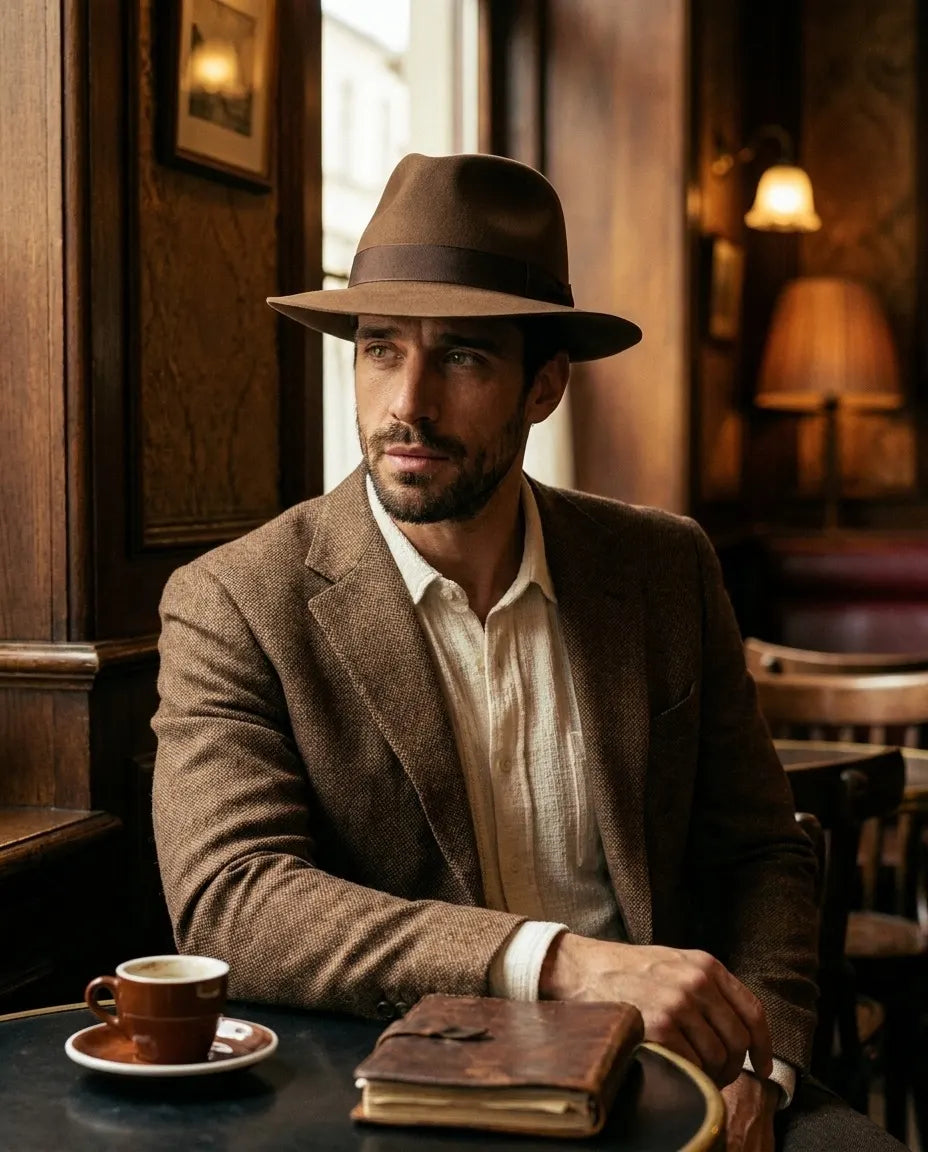
The goal is not to make your head as warm as possible.
The goal is to keep it comfortable.
Material Matters More Than Thickness Alone
Two hats can look similarly substantial but behave very differently.
Wool felt, for example, has a dense and naturally insulating structure, which makes it well suited to cooler weather. However, the weight and construction of the felt can vary significantly.
A lightweight wool felt fedora can feel very different from a thick winter hat designed for prolonged exposure to freezing conditions.
This is why shopping for a felt fedora hat for fall should not be reduced to asking whether the material is warm.
Instead, consider:
- How dense is the felt?
- Is the hat heavily lined?
- How does the sweatband feel?
- Is the crown structured or soft?
- How long will you wear it?
- Will you spend most of the day indoors or outside?
These details have a noticeable impact on comfort.
The Brim Can Be More Useful Than Extra Insulation
One of the advantages of a classic fedora or other structured fall hat is that the brim provides coverage without requiring the entire hat to become heavily insulated.
A brim can shade your face from low autumn sunlight, provide some protection from light wind and add visual structure to an outfit.
This is especially useful during transitional weather.
You might not need a thick winter hat simply because the morning is cold. A moderate felt hat with a practical brim can provide the coverage you need while remaining suitable for the warmer part of the day.
In other words, protection does not always have to come from added thickness.
Why Felt Works So Well in Fall
Felt occupies an interesting position between lightweight summer hats and heavy winter headwear.
Straw is naturally associated with warmer weather because its woven construction allows considerable airflow. Thick winter hats, meanwhile, are designed primarily around insulation.
Felt sits somewhere in the middle.
A well-made felt fedora can offer warmth, structure and a more substantial texture while still working with the lighter layers commonly worn during fall.
It also complements the visual character of the season.
Wool coats, denim jackets, overshirts, knit sweaters, boots and textured fabrics naturally pair with felt. The material itself adds depth to an outfit without requiring bright colors or complicated styling.
The Right Hat Depends on What You Are Doing
Temperature is only one part of the equation.
Consider two people experiencing the same fall afternoon.
One is walking slowly through town, stopping at cafés and spending time outdoors. The other is hiking, cycling or moving continuously.
The first person may find a felt fedora perfectly comfortable. The second may prefer something lighter and more breathable.
Physical activity increases body heat, which changes how a hat feels.
This is why there is no universal temperature at which a particular fall hat becomes “too warm.” Weather, activity and personal comfort all matter.
Your Clothing Should Influence Your Hat Choice
A hat does not exist separately from the rest of your outfit.
If you are wearing a lightweight shirt, thin trousers and sneakers, a very heavy winter hat can make the outfit feel visually unbalanced.
On the other hand, a felt fedora can make sense with a wool overshirt, denim jacket or medium-weight coat because the materials share a similar visual weight.
This is one reason fall is such a good season for felt hats. You can build outfits around texture rather than simply adding layers for warmth.
A hat should complement the weight of your clothing rather than compete with it.
When Is a Warmer Hat Actually Better?
There are certainly days when maximum warmth makes sense.
If temperatures are consistently low, wind is strong, or you expect to spend extended periods outdoors without much movement, a more insulated winter hat may be the smarter choice.
Late fall can also blur the line between autumn and winter. When conditions become consistently cold, choosing a hat based primarily on appearance rather than protection can quickly become impractical.
The important distinction is that fall does not automatically mean light, and winter does not automatically mean heavy.
Weather conditions should make the decision.
Think in Terms of a Seasonal Hat Wardrobe
Instead of searching for one hat that works for every cold-weather situation, it can be more useful to think about a small seasonal rotation.
A lightweight hat can handle mild fall afternoons.
A felt fedora can take you through cooler mornings and evenings.
A heavier wool or winter hat can be reserved for genuinely cold conditions.
This approach also makes your wardrobe more versatile. You can choose a hat based on the day's conditions rather than forcing the same style into every situation.
The Best Fall Hat Is the One You Forget You Are Wearing
Comfort is often easiest to recognize when you stop thinking about it.
If your hat feels too tight, too hot, too heavy or constantly needs adjustment, it is probably not the right choice for that particular day.
A good fall hat should feel natural. It should provide enough coverage for the conditions without making you feel as though you are already dressed for the middle of winter.
That is why the warmest hat is not automatically the best one.
The ideal fall hat sits in the middle: warm enough for cool air, light enough for changing temperatures, comfortable enough for extended wear and versatile enough to work with the clothing you already enjoy wearing.
Fall is not a season that rewards extremes.
The most useful hat is rarely the one with the most insulation. Instead, it is the one that responds well to the conditions you actually experience.
A lightweight felt fedora hat can be an excellent option because it combines moderate warmth with structure, coverage and timeless styling. When temperatures drop further, a heavier winter hat may become more appropriate. When the afternoon turns mild, a lighter construction can prevent the uncomfortable feeling of being overdressed for the weather.
Ultimately, choosing a fall hat is less about asking “Which hat is warmest?” and more about asking “Which hat will keep me comfortable throughout the day?”
That small change in perspective can make a surprisingly big difference.


