
Few accessories capture the atmosphere of classic film noir quite like a felt fedora. Its defined crown, carefully shaped brim, and understated silhouette evoke rain-soaked streets, dimly lit offices, tailored overcoats, and the mysterious characters who inhabit the world of black-and-white cinema. Even without a dramatic setting, the hat carries a distinctive visual language that feels both timeless and individual.
The enduring appeal of the felt fedora goes beyond nostalgia. Its structured shape works naturally with classic menswear, while its range of colors and brim profiles makes it adaptable to contemporary wardrobes. Whether paired with a wool overcoat, a dark suit, or a more relaxed combination of denim and leather, a well-chosen felt hat can add depth and character to an outfit.
Understanding the relationship between film noir fashion and the felt fedora offers more than a look back at cinematic history. It provides a practical guide to building a personal style around proportion, texture, and understated confidence.
1. What Defines the Film Noir Aesthetic?
Film noir is closely associated with crime dramas and psychological thrillers, particularly those made during the 1940s and 1950s. Its visual identity often relies on high-contrast lighting, deep shadows, reflective streets, and carefully composed interiors. Characters appear against a world of uncertainty, where a simple gesture or a sharply defined silhouette can communicate as much as dialogue.
Costume design plays an important role in this atmosphere. Tailored suits, trench coats, leather shoes, dark shirts, and brimmed hats create recognizable outlines that remain visually striking even in monochrome photography.
The fedora became an especially memorable part of this visual vocabulary. Its brim could cast a shadow across the eyes, while its structured crown provided a clear profile beneath a coat collar or against a city skyline.
However, the fedora was not exclusive to film noir. It was also a widely worn hat in everyday life during earlier decades. Cinema helped turn an ordinary element of menswear into a powerful visual symbol, connecting it with mystery, sophistication, and urban character.
Today, the film noir aesthetic can be adapted without recreating an entire period costume. A modern outfit built around a felt fedora, a well-fitting coat, and a restrained color palette can capture the same atmosphere while remaining practical for everyday wear.
2. Why the Felt Fedora Became a Cinematic Icon
The felt fedora has several qualities that make it particularly effective in cinematic styling. Its appeal comes from a combination of shape, material, and visual balance.
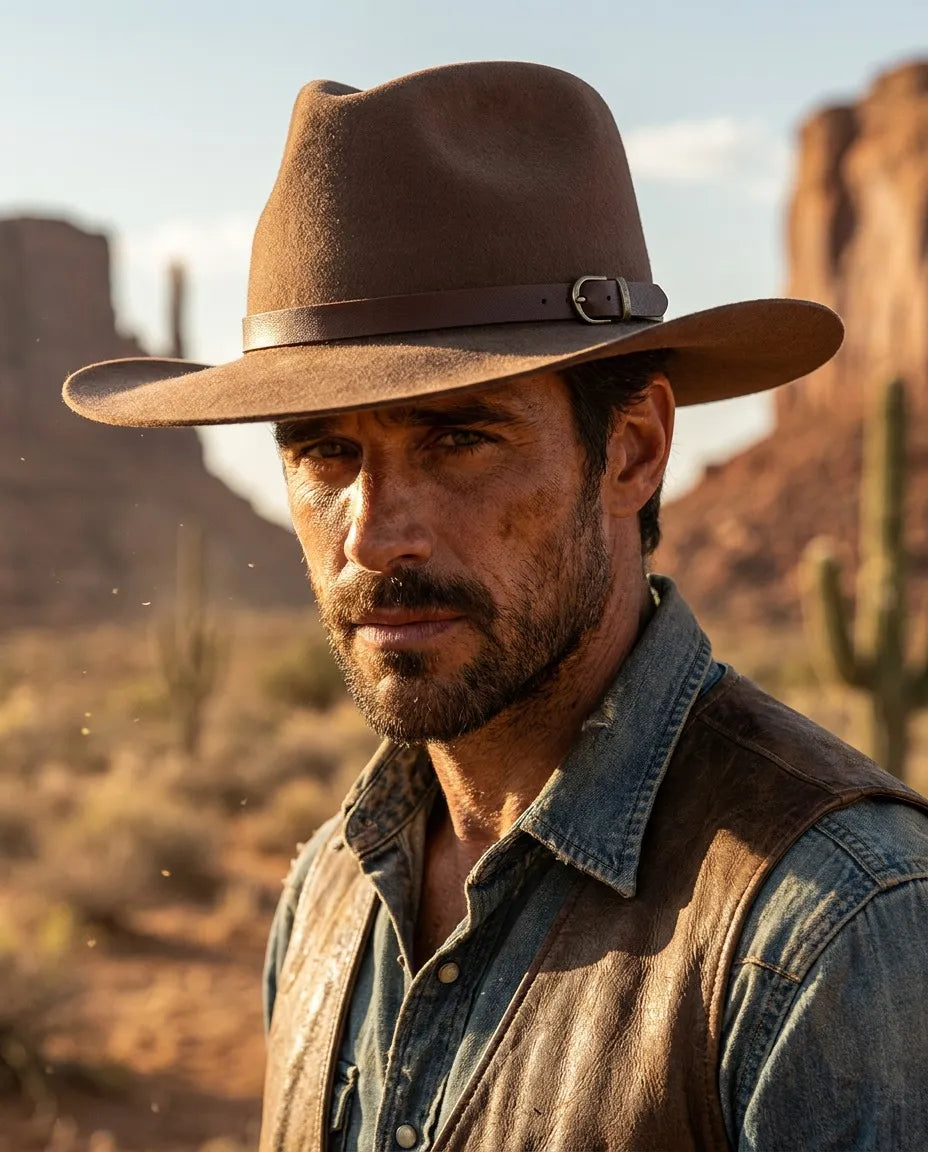
A Distinctive Crown and Brim
A traditional fedora typically features a shaped crown, often with a central indentation and a pinched front, alongside a brim that can be worn in different positions. These details give the hat a recognizable profile.
In film noir imagery, the brim creates a natural line of shadow across the face. The effect can suggest secrecy or introspection without requiring elaborate costume details.
For everyday wear, the same structure helps frame the face and gives simple clothing a more deliberate finish. A moderate brim is a versatile starting point, while a wider brim creates a stronger, more dramatic presence.
Felt Adds Depth and Texture
Unlike lightweight woven straw, felt has a denser surface and a more substantial appearance. Wool felt and fur felt can both be used to create structured hats, although their characteristics vary according to the fibers, construction, and finish.
The material works particularly well with wool coats, textured jackets, leather accessories, and heavier autumn fabrics. These combinations create visual continuity because the hat does not feel disconnected from the rest of the outfit.
A black or charcoal felt fedora reinforces the traditional noir palette, while brown, taupe, and grey offer softer interpretations of the same classic style.
A Balance Between Formality and Character
The fedora occupies an interesting position between formal headwear and casual accessories. Its shape is refined enough to complement tailored clothing, yet its history gives it a more individual character than many conventional accessories.
This versatility helps explain why the felt fedora remains relevant in modern vintage-inspired fashion. It can add personality to an otherwise simple outfit without requiring a complete commitment to retro dressing.
3. Choosing the Right Felt Fedora for Your Style
The most effective way to wear a felt fedora is to choose a shape that complements your proportions and wardrobe. Not every crown or brim creates the same impression, and small differences can change the overall appearance considerably.
The Classic Black Felt Fedora
A black felt fedora is the most direct reference to traditional film noir style. It pairs naturally with charcoal coats, dark suits, black leather shoes, and restrained accessories.
For a contemporary interpretation, combine it with a charcoal wool overcoat, a fine-gauge black or grey sweater, and tailored trousers. The tonal palette creates depth through differences in texture rather than contrasting colors.
Black is versatile, but it can appear visually heavy in a light outfit. If you prefer cream knitwear, beige trousers, or lighter outerwear, consider a grey or brown hat instead.
The Brown Felt Fedora
A brown felt fedora offers a warmer, more relaxed alternative. It works particularly well with camel coats, olive jackets, dark denim, and tobacco-colored leather accessories.
This option suits men who appreciate vintage character but do not want the strong contrast associated with an all-black outfit. It also transitions naturally between heritage-inspired clothing and modern casual wear.
The Grey Felt Fedora
Grey sits comfortably between formal and casual styling. A charcoal fedora creates a refined appearance with darker tailoring, while medium grey can complement navy, beige, and muted earth tones.
For a balanced outfit, repeat the grey subtly in a coat, scarf, or pair of trousers rather than matching every item exactly.
Wide Brim or Moderate Brim?
A moderate brim generally works well with everyday tailoring because it maintains a balanced silhouette. A wider brim creates a more expressive, cinematic look and can complement longer overcoats or garments with stronger proportions.
Consider the shape of the crown as well as the brim width. A hat should sit comfortably and securely, with enough room to avoid pressure while maintaining its intended profile.
The right choice is the one that complements your features and clothing rather than the one that looks most dramatic in a photograph.
4. Five Ways to Wear a Felt Fedora with Film Noir Influence
The visual language of film noir can be translated into modern outfits through a few carefully chosen pieces. These combinations draw on classic cinematic styling without turning everyday clothing into a costume.
Look 1: The Classic Noir Gentleman
Pair a black felt fedora with a charcoal overcoat, a dark tailored suit, a white shirt, and polished leather shoes.
The contrast between the shirt and darker outer layers gives the outfit definition. Keep the tie simple and avoid excessive accessories so the hat remains a natural part of the silhouette.
This combination is best suited to cooler weather, evening occasions, and settings where tailored clothing feels appropriate.
Look 2: The Modern City Minimalist
Choose a charcoal felt fedora, a navy wool coat, a black fine-knit sweater, and straight-leg trousers.
The combination uses dark colors without relying entirely on black. Different fabric textures introduce visual interest, while the clean lines make the outfit feel contemporary.
This is a practical interpretation of noir-inspired style for city walks, dinners, and smart-casual occasions.
Look 3: The Vintage Detective
Combine a brown felt fedora with a textured wool coat, a button-down shirt, dark trousers, and leather boots.
A muted palette of brown, olive, charcoal, and cream gives the outfit a heritage-inspired quality. A leather belt or simple shoulder bag can reinforce the look without adding unnecessary detail.
The aim is to capture the atmosphere of vintage detective fashion through materials and proportions rather than literal costume pieces.
Look 4: The Relaxed Vintage Look
A felt fedora can work with more casual clothing, too. Pair a medium-grey hat with a dark denim jacket, a plain cotton shirt, straight-leg jeans, and leather boots.
The denim introduces a rugged texture that balances the hat's more structured appearance. Choose clean, understated garments so the combination feels intentional rather than overly themed.
This is a useful option for people who enjoy vintage accessories but prefer everyday clothing over formal tailoring.
Look 5: The Contemporary Evening Look
For a more refined evening outfit, combine a black or charcoal felt fedora with a dark blazer, a fine-knit top, tailored trousers, and minimalist leather footwear.
The result retains some of film noir's dramatic character while using modern silhouettes and fewer period-specific details.
For occasions with a strict formal dress code, consider whether a hat is appropriate once indoors. The fedora should complement the setting rather than become an accessory that feels out of place.
5. The Colors and Textures That Create a Noir-Inspired Wardrobe
Film noir is frequently associated with black-and-white imagery, but its styling principles can also work with color. The important elements are contrast, texture, and a controlled palette.
Black and charcoal create a traditional noir atmosphere. They work particularly well with structured coats, dark tailoring, and black felt hats.
Navy and grey offer a more understated alternative. A navy overcoat and charcoal fedora create enough contrast to distinguish the pieces without making the outfit feel too stark.
Brown and tobacco bring warmth to vintage-inspired styling. These shades complement leather, denim, textured wool, and earth-toned outerwear.
Cream and stone can lighten the overall appearance. A pale knit or shirt beneath a dark coat creates contrast around the neckline and keeps the outfit from becoming visually flat.
Texture is equally important. Smooth felt beside a textured wool coat creates subtle contrast. Leather shoes add a polished finish, while denim introduces a more casual element.
Rather than adding several statement accessories, let the relationship between the materials do the work. This approach creates an outfit that feels considered without appearing overly styled.
6. From Classic Cinema to Modern Menswear
The appeal of film noir fashion lies in its atmosphere, but its most useful lessons are surprisingly practical. Strong silhouettes, balanced proportions, restrained colors, and quality materials remain relevant regardless of the decade.
A felt fedora can serve as a focal point in a modern wardrobe, especially when paired with contemporary coats, simple knitwear, and well-fitting trousers. You do not need a vintage suit or a period-specific trench coat to make the combination work.
For everyday styling, begin with familiar clothing. A wool coat, dark jeans, and leather boots provide a simple foundation. Add the fedora only when its shape and color complement the rest of the outfit.
It is also worth considering the setting. A dramatic black fedora may feel natural with a long dark coat but less convincing with lightweight beachwear. A brown or grey style may offer greater flexibility if your wardrobe includes both tailored and casual pieces.
The strongest modern interpretation of cinematic style is selective. Borrow the details that appeal to you and leave behind anything that feels impractical or forced.
7. How to Care for a Felt Fedora
A felt hat can retain its appearance for many seasons when handled and stored correctly. Its care requirements depend on the material, finish, and construction, so follow the manufacturer's recommendations whenever possible.
- Brush away surface dust: Use a suitable soft hat brush and follow the recommended brushing direction for the material.
- Handle the crown carefully: Avoid repeatedly pinching the crown, particularly if the hat has a structured shape.
- Protect it from moisture: If the hat gets wet, follow the manufacturer's drying guidance and allow it to dry naturally away from direct heat.
- Store it with support: A suitable hat box or stand helps protect the crown and brim from pressure and accidental distortion.
- Avoid unverified reshaping methods: Steam and heat can affect different felt materials and finishes differently. Use professional hat care if the shape needs significant correction.
Good care preserves more than appearance. It helps maintain the hat's structure, making it easier to wear confidently with different outfits.
8. Why the Felt Fedora Still Matters
Fashion changes, but certain accessories remain useful because they combine a recognizable shape with practical versatility. The felt fedora is one of them.
Its association with classic cinema gives it a distinctive character, while its structured form works with a wide range of modern clothing. A black version can create a dramatic, tailored look; brown adds warmth; and grey offers a restrained alternative that fits naturally into many wardrobes.
The key is to treat the hat as part of a complete outfit rather than a shortcut to a particular aesthetic. Well-fitting clothing, balanced proportions, and thoughtful material choices matter just as much as the hat itself.
The result does not need to recreate a scene from an old film. It simply needs to capture the qualities that made those images memorable: confidence, restraint, and a strong sense of personal style.
Frequently Asked Questions
Why are felt fedoras associated with film noir?
Felt fedoras were widely worn during the era associated with classic film noir. Their structured crowns and brims created recognizable silhouettes and dramatic facial shadows that worked especially well with the genre's high-contrast cinematography.
What should you wear with a felt fedora?
A felt fedora pairs well with wool overcoats, tailored suits, knitwear, dark denim, and leather footwear. Choose the combination according to the hat's color and brim shape, as well as the formality of the occasion.
Is a black felt fedora better than a brown one?
Neither is universally better. Black creates a stronger, more dramatic appearance and suits darker tailoring. Brown offers a warmer, more relaxed look and works naturally with camel, olive, denim, and earth-toned clothing.
Can you wear a felt fedora casually?
Yes. A felt fedora can complement a denim jacket, a plain shirt, straight-leg jeans, and boots. A moderate brim and a simple design are generally easy to incorporate into a casual wardrobe.
How do you keep a felt fedora in good condition?
Brush away dust with an appropriate soft brush, handle the hat carefully, protect it from excessive moisture and heat, and store it where the crown and brim will not be crushed. Follow the manufacturer's care instructions for the specific felt material.
The felt fedora remains a cinematic icon because it brings shape, texture, and character together in a single accessory. Its connection to film noir gives it a distinctive visual identity, but its real strength lies in how easily it can complement modern menswear.
Start with a color and crown shape that suit your wardrobe, build around balanced proportions and thoughtful textures, and let the hat add character without dominating the outfit.
Classic cinema may have helped define the fedora's image, but the way you wear it today is what makes the style your own.


